
Multiple discrimination and violence against Dalit and Buraku women and girls (HRC35, 2017, OS)
June 13, 2017
IMADR delivered its oral statement on “Multiple discrimination and violence against Dalit and Buraku women and girls” at the 35th session of the Human Rights Council. Whole text can be read below or downloaded here. 
———
IMADR Oral Statement: 35th session of the Human Rights Council
Item 3: General Debate, the High Commissioner’s Report on “Impact of multiple and intersecting forms of discrimination and violence in the context of racism, racial discrimination, xenophobia and related intolerance on the full enjoyment of all human rights by women and girls”
13 June 2017
Speaker: Taisuke Komatsu
Thank you Mr. President,
IMADR welcomes the High Commissioner’s report to address multiple and intersecting forms of discrimination and violence against women and girls in the context of racial discrimination. It is a step forward of the Human Rights Council to pay a specific attention to this area of discrimination which is often overlooked. We note with concern that the call for inputs for the report was circulated to civil society only on 16th November, less than a month before the deadline (12 December), via the OHCHR’s email update to civil society. Such a short notice made it difficult for us to contribute to the report or to encourage partners to do so.
While endorsing the High Commissioner’s recommendations to all States in order to achieve the 2030 Agenda to “leave no-one behind”, we would like to reiterate the recommendation on making the UPR process an opportunity to combat multiple forms of discrimination and violence against minority and indigenous women and girls. We welcome that a number of States have already made recommendations on indigenous and minority women in the 1st and 2nd cycles such as on women of Africa-descent, migrant, refugee and Roma.
However, we express concerns that there was no specific recommendation on Dalit women and girls in the last two cycles.[1] As the 3rd cycle of UPR started this year, we encourage States to continue and strengthen recommendations on minority and indigenous women including those belonging to Dalits. In order to close the gap on the specific human rights situation of women and girls discriminated based on gender, work and descent, we conduct a comparative study of Dalit and Buraku women and girls in Asia. We hope that the study will help the Council and the OHCHR’s efforts to tackle discrimination and atrocities experienced by Dalit and Buraku women.
Thank you Mr. President
———
Related Content
【HRC 63 Written Statement】Report on Enforced Disappearance in Sri Lanka
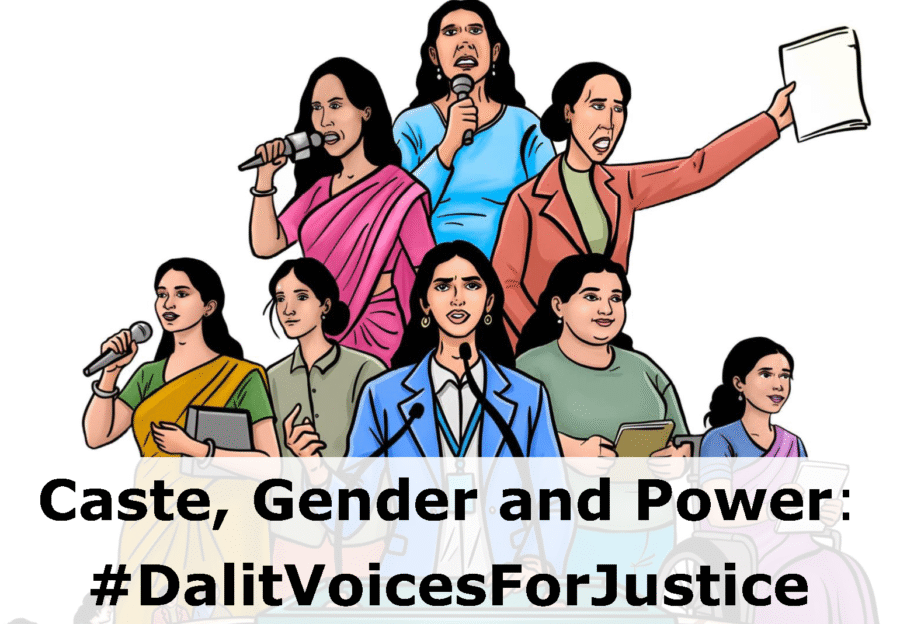
【HRC62 Side Event】Caste, Gender and Power: #DalitVoicesForJustice

Newsletter E-CONNECT No.40 is out